
How Is Dupuytren’s Viking Disease Different From Other Hand Conditions?
- Health
- Aug 27
- Share post
When the fingers gradually become difficult to straighten, it can be easy to assume that the problem is caused by arthritis, trigger finger, or another common hand condition. However, dupuytren’s viking disease has some distinct characteristics that can help differentiate it from other causes of finger stiffness and limited movement.
The term “Viking disease” is commonly used as another name for Dupuytren’s contracture. It describes a condition involving changes in the connective tissue beneath the skin of the palm. Over time, this tissue can become thicker and tighter, which may pull one or more fingers toward the palm.
Understanding these differences can help people recognize changes in their hands and seek an appropriate professional evaluation.
What Is Dupuytren’s Viking Disease?
Dupuytren’s viking disease affects the palmar fascia, a layer of connective tissue located underneath the skin of the palm. Small areas of thickened tissue may initially appear as firm nodules or cords.
In the early stages, a person may notice a small lump in the palm without experiencing significant movement problems. As the tissue changes progress, however, cords can develop and gradually restrict the ability to fully straighten certain fingers.
The ring and little fingers are particularly commonly affected, although other fingers can also become involved. The condition can develop slowly over several years, and its progression differs from person to person.
How Is It Different From Arthritis?
Arthritis is one of the most common explanations for hand stiffness. But arthritis and Dupuytren’s contracture involve different structures.
Arthritis primarily affects the joints. Depending on the type of arthritis, symptoms may include joint pain, swelling, tenderness, stiffness, and reduced range of motion.
With dupuytren’s viking disease, the primary changes occur in the connective tissue of the palm rather than inside the finger joints. A person may have relatively little joint pain while still having difficulty placing the hand completely flat on a table.
This distinction is important because finger stiffness does not always mean arthritis.
Dupuytren’s Viking Disease vs. Trigger Finger
Trigger finger can also make everyday finger movement frustrating, but its pattern is usually different.
Trigger finger occurs when a tendon and its surrounding pulley do not glide smoothly. Affected people may experience clicking, catching, or locking as they bend and straighten a finger. Discomfort is often felt around the base of the affected finger.
In contrast, dupuytren’s viking disease is associated with thickened connective tissue in the palm. Instead of a finger repeatedly catching during movement, the main concern may be a gradually increasing inability to straighten the finger.
Because these conditions can sometimes occur in the same person, a proper examination is useful when symptoms are unclear.
How Does It Differ From Carpal Tunnel Syndrome?
Carpal tunnel syndrome affects a nerve rather than the connective tissue of the palm.
People with carpal tunnel syndrome may experience numbness, tingling, burning sensations, weakness, or difficulty with certain gripping activities. Symptoms often involve the thumb, index finger, middle finger, and part of the ring finger.
Dupuytren’s viking disease, on the other hand, generally presents as physical changes in the palm, such as nodules, cords, or progressive finger contracture. Numbness and tingling are not usually the defining features.
This makes the two conditions quite different even though both can interfere with normal hand function.
What About Tendon Injuries?
Tendon injuries may occur after an accident, cut, sports injury, or other physical trauma. Depending on the tendon involved, the person may suddenly lose the ability to bend or straighten a particular finger.
Dupuytren’s changes typically develop much more gradually. A person may notice a small thickened area in the palm first and only later recognize that a finger is becoming harder to straighten.
The timeline is therefore another useful clue. A sudden loss of movement after an injury deserves prompt medical assessment, while gradual changes without a clear injury may have a different underlying cause.
Recognizing the Early Signs
Early dupuytren’s viking disease may be subtle. Someone might notice a firm lump in the palm, slight tightness, or a feeling that one finger does not move quite as freely as it once did.
As the condition progresses, the affected finger may begin resting in a bent position. Some people also notice difficulty with activities such as shaking hands, putting a hand into a pocket, wearing gloves, playing an instrument, or placing the palm flat against a surface.
Not every palm nodule will progress to significant contracture. That is why monitoring changes and discussing them with a qualified healthcare professional can be helpful.
Supporting Hand Mobility
For people dealing with changes associated with dupuytren’s viking disease, maintaining comfortable hand movement can become an important part of everyday self-care. Gentle mobility exercises and stretching may be included in a personalized hand-care routine when appropriate.
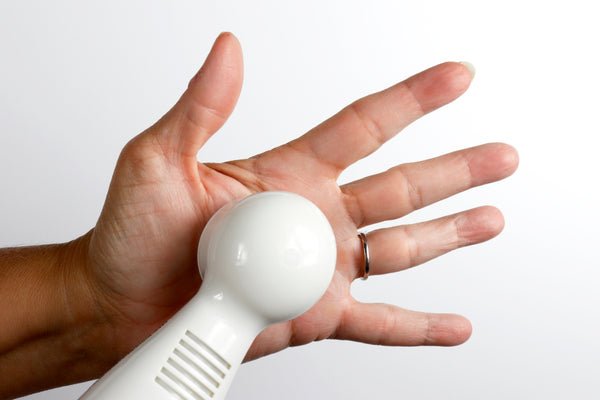
At-home tools such as the Dupuytren’s Wand may also be used as part of a supportive hand-care routine. However, they should not be considered a replacement for professional diagnosis or treatment, particularly when contracture is progressing or hand function is becoming significantly limited.
A healthcare professional can determine whether observation, hand therapy, injections, a procedure, or another approach is appropriate based on the individual situation.
When Should You Get Your Hand Checked?
A new lump or gradual change in finger position does not necessarily mean that you have Dupuytren’s contracture. Several hand conditions can produce overlapping symptoms.
Consider seeking professional evaluation if you notice a persistent lump in the palm, increasing difficulty straightening a finger, worsening hand function, significant pain, numbness, or symptoms following an injury.
Final Thoughts
Although arthritis, trigger finger, carpal tunnel syndrome, and tendon injuries can all affect everyday hand function, dupuytren’s viking disease has a different underlying pattern. Its connection with thickened tissue and cords in the palm, followed by possible finger contracture, helps distinguish it from many other hand conditions. Recognizing these differences is useful, but a healthcare professional should make the diagnosis. Early attention to noticeable changes can help you understand what is happening and explore appropriate options for maintaining hand function and mobility.